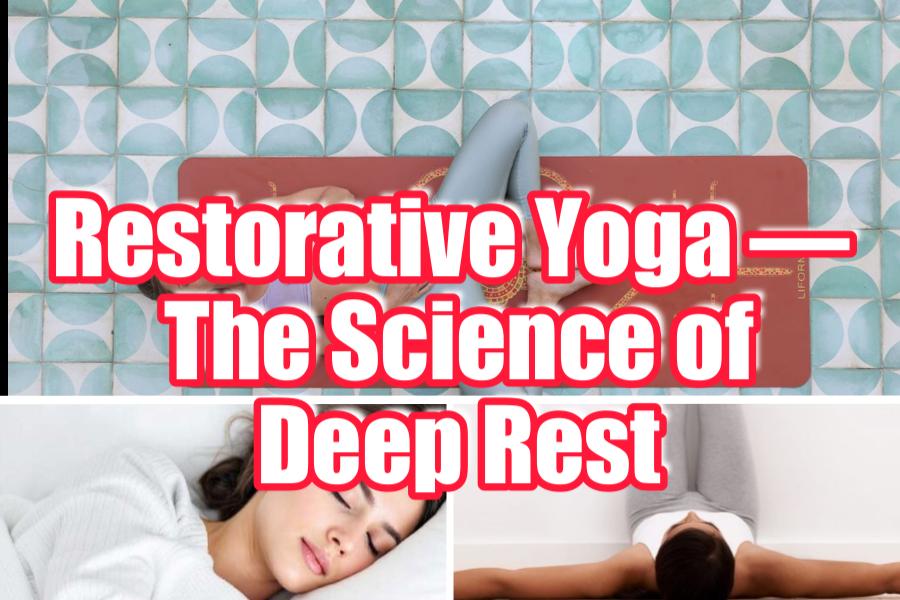
In a world that glorifies hustle, restorative yoga feels almost rebellious. It’s the practice of slowing down, softening the body, and allowing yourself to rest without guilt. Instead of stretching or strengthening, restorative yoga invites you to simply be — to sink into stillness long enough for your nervous system to exhale fully. In today’s fast-paced culture, this kind of rest is rare, yet deeply needed.

What makes restorative yoga so unique is its emphasis on complete support. Each pose is held for five to ten minutes, sometimes even longer, with the body fully cushioned by pillows, blankets, or bolsters. There is no effort, no pushing, no striving. The goal is pure ease — to remove muscular work so the body can shift into repair mode. As you sink into each posture, tension begins to dissolve naturally, like knots untying from the inside out.

The effects go far beyond relaxation. Research shows that restorative yoga reduces anxiety by calming the parasympathetic nervous system — your body’s built-in “rest and digest” mode. It can lower blood pressure, steady the heart rate, improve sleep quality, and help regulate emotions. Many people describe it as “a reset button,” especially during periods of burnout, overwhelm, or emotional heaviness. It teaches the body that rest is not a luxury, but a biological necessity.

Restorative Yoga — The Science of Deep Rest
In a world that glorifies hustle, restorative yoga feels almost rebellious. It’s the practice of slowing down, softening the body, and allowing yourself to rest without guilt. Instead of stretching or strengthening, restorative yoga invites you to simply be — to sink into stillness long enough for your nervous system to exhale fully. In today’s fast-paced culture, this kind of rest is rare, yet deeply needed.

What makes restorative yoga so unique is its emphasis on complete support. Each pose is held for five to ten minutes, sometimes even longer, with the body fully cushioned by pillows, blankets, or bolsters. There is no effort, no pushing, no striving. The goal is pure ease — to remove muscular work so the body can shift into repair mode. As you sink into each posture, tension begins to dissolve naturally, like knots untying from the inside out.

The effects go far beyond relaxation. Research shows that restorative yoga reduces anxiety by calming the parasympathetic nervous system — your body’s built-in “rest and digest” mode. It can lower blood pressure, steady the heart rate, improve sleep quality, and help regulate emotions. Many people describe it as “a reset button,” especially during periods of burnout, overwhelm, or emotional heaviness. It teaches the body that rest is not a luxury, but a biological necessity.

A simple restorative sequence can work wonders. Start with Supported Child’s Pose, letting your torso drape over cushions as your breath slows. Move into Legs-Up-the-Wall, a deeply soothing inversion that reduces swelling in the legs and quiets the mind. Finish with Reclined Bound Angle, allowing the hips and chest to open while the rest of your body melts into support. With each pose, you’re not asking your body to do more — you’re inviting it to release more.
Restorative yoga is a reminder that healing doesn’t always require movement. Sometimes the most powerful transformation happens in stillness.
Restorative yoga teaches that doing less often heals more.