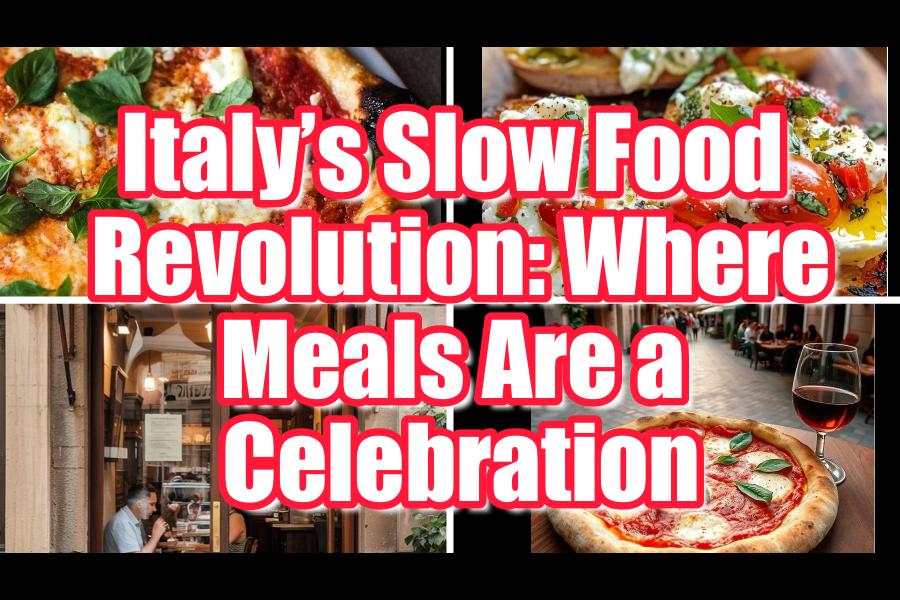
In a small trattoria in Tuscany, the scent of garlic, basil, and simmering tomatoes fills the air. Families gather around long tables, wine glasses glinting under soft light. No one’s checking their phones. Here, mealtime is not a pause between errands — it’s the heartbeat of life.

The Birth of a Movement
In 1986, when McDonald’s tried to open near Rome’s Spanish Steps, Italians protested — not against burgers, but against losing something sacred: time. This protest birthed the Slow Food Movement, founded by Carlo Petrini in Piedmont. Its motto? Buono, pulito e giusto — good, clean, and fair.
A Way of Life
In Italy, “slow” doesn’t mean lazy — it means intentional. Every plate tells a story of soil and season. Farmers’ markets overflow with sun-kissed tomatoes and handmade cheese. In Bologna, pasta is still rolled by hand; in Naples, pizza dough rests for 24 hours before baking.


The Slow Food movement spread worldwide, but in Italy, it never had to. It was already there — in every grandmother’s kitchen and every village square where locals linger over espresso.
The Table as Theatre
A true Italian meal unfolds like an opera: antipasti (the prelude), primi (the melody), secondi (the heart), dolci (the finale). But the best part isn’t the food — it’s the conversation, the laughter, the refusal to rush.

Beyond the Plate
Slow food is a mirror of slow living. It reminds us that joy isn’t found in multitasking, but in being present — in kneading dough, pouring wine, tasting life.

In Italy, to eat slowly is to live fully. Every meal is a love letter to patience, pleasure, and the art of connection.