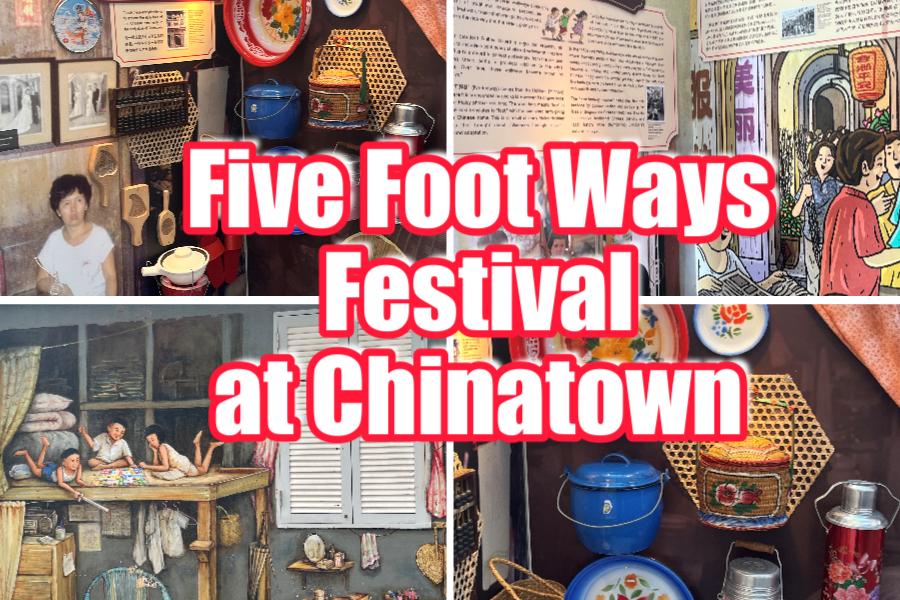
Step into Chinatown during the Five Foot Ways Festival, and you’re not just walking through a street—you’re stepping into a living time capsule. Inspired by the iconic five-foot ways (covered walkways found in old shophouses), the festival recreates scenes from early Chinese life in Singapore, blending history, culture, and everyday stories into an immersive experience.

These sheltered walkways were more than architectural features—they were the heartbeat of the community. In the late 19th and early 20th centuries, they became bustling corridors of trade. Hawkers, cobblers, barbers, herbalists, and street vendors lined these narrow paths, turning them into vibrant micro-economies. Life was tough, space was tight, but resilience thrived.


One powerful layer of the festival is the story of early Chinese migrants. Many arrived in Singapore with little more than hope, escaping poverty and unrest in southern China. Among them were the 红头军 (Red Headgear labourers)—so named for the red cloth they wore while working under the scorching sun. These labourers took on backbreaking jobs: construction, port work, rickshaw pulling. Their sweat quite literally helped build Singapore’s early infrastructure.

Amidst these struggles, community life still found a way to flourish. Families lived in cramped quarters, often above or behind their workplaces. Everyday objects—enamel cups, tiffin carriers, charcoal stoves—tell stories of survival, adaptation, and simple joys. The festival beautifully brings these scenes back to life through detailed displays and interactive installations.


Another key highlight is the connection to Dr. Sun Yat Sen, a revolutionary leader often regarded as the founding father of modern China. His presence in Singapore is deeply rooted in history, particularly at the Sun Yat Sen Nanyang Memorial Hall (晚晴园). Originally a villa known as Wan Qing Yuan, it became a strategic base for revolutionary activities during the 1911 Revolution. From here, Sun Yat Sen rallied support among the overseas Chinese community in Southeast Asia—many of whom were migrants living and working along these very five-foot ways.


The festival ties these narratives together seamlessly. As you walk through recreated alleys and displays, you see how global history and local lives intersected—how political movements, migration, and daily survival all converged in this small but significant space.

Today, the Five Foot Ways Festival is more than a heritage showcase. It’s a tribute to the grit, dreams, and contributions of early Chinese pioneers. It reminds us that behind every modern skyline lies a foundation built on sacrifice, resilience, and community spirit—right beneath our feet.