Step onto Jalan Tan Hiok Nee and Johor Bahru suddenly seems to slow down.
The modern shopping malls, traffic jams and impatient car horns are still nearby, but along this nostalgic heritage street, weathered shophouses, traditional bakeries, old kopitiams and colourful murals take centre stage. Even the ceiling fans appear to be spinning at a more relaxed Malaysian pace.
Address: Jalan Tan Hiok Nee, Bandar Johor Bahru, 80000 Johor Bahru, Johor, Malaysia
Getting there: Located within walking distance of JB Sentral, City Square and the surrounding old-town streets.
Nearby Destination: Impian Emas Night Market JB (金山园夜市): Thursday Food Guide, Johor Ancient Temple: 150 Years of History in JB, SKS Mall JBCC: Johor Bahru’s New Shopping & Lifestyle Hotspot, SKS City Mall Johor: Next Big Hangout Spot to Watch


Named after Tan Hiok Nee, an influential 19th-century Chinese businessman and community leader, this historic road preserves an important chapter of Johor Bahru’s early development. Today, it has evolved into a lively mixture of food, retail, culture and traditional trades—popular with Johor locals as well as Singaporeans arriving for a familiar routine: eat, queue, buy something home and repeat.
Come Hungry, Leave Carrying Cakes
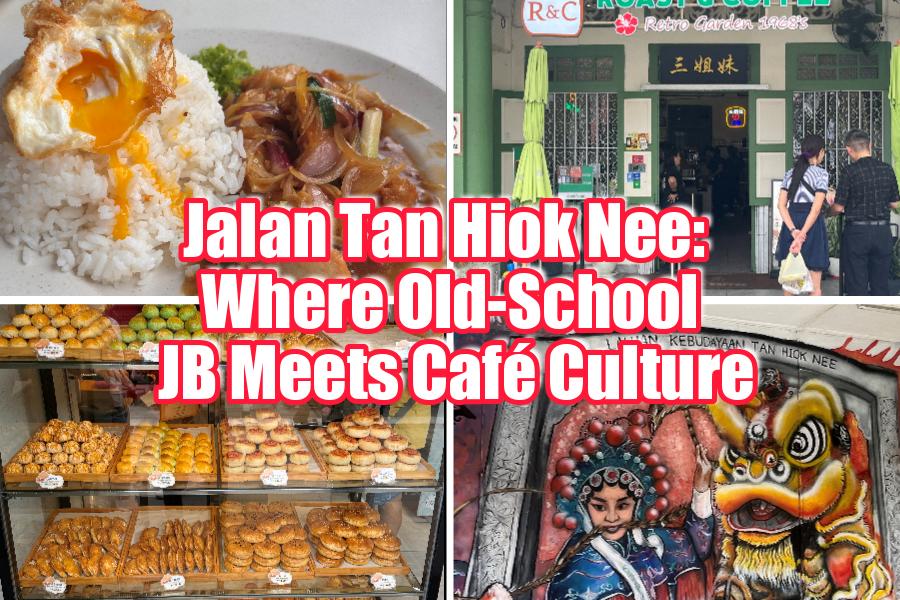
One of the biggest attractions is Hiap Joo Bakery & Biscuit Factory 协裕面包西菓厂, an old-fashioned bakery at 13 Jalan Tan Hiok Nee. Instead of relying entirely on modern electric equipment, its famous banana cakes and buns are associated with a traditional wood-fired oven that has been used for generations.
You may smell the bakery before you see it. Then you will notice the queue.
Customers patiently wait for warm banana cake, coconut buns and freshly baked bread, while staff work inside an interior that looks wonderfully untouched by modern café fashion. There are no marble counters, neon motivational quotes or chairs designed mainly for Instagram. The star is simply the baking—and judging by the crowd, that is more than enough.


Nearby, 小福饼家 offers another colourful display of traditional Chinese pastries. Neatly arranged trays contain flaky biscuits, sweet and savoury buns, tau sar piah-style pastries and beautifully stamped cakes. The glass showcase is dangerous for anyone who says, “I’m only looking.” Five minutes later, you may be holding three bags and explaining that they are “souvenirs”.


Kopitiam Comfort and Familiar Flavours
Traditional coffee shops remain an important part of the neighbourhood. Qin Garden Kopitiam 沁园咖啡馆 retains the appearance of an older neighbourhood eatery, complete with bamboo blinds, simple tables and a no-frills interior.

A short walk away on Jalan Trus is Restoran Hua Mui, one of Johor Bahru’s best-known Hainanese restaurants. Established in 1946, it is recognised for preserving traditional Hainanese flavours while incorporating Malaysia’s multicultural food influences.
The two-storey blue-and-white building is already a landmark. Diners come for Hainanese chicken chop, kaya toast, eggs, coffee and other comforting favourites. Inside, the atmosphere feels familiar to many Singaporeans—perhaps because the combination of kopi, toast and old tiled interiors reminds us of the kopitiams our parents and grandparents visited.


There is also no shortage of modern choices. Container cafés such as SMOL by Dayla’s bring coffee, pastries and desserts into the old-town landscape. Traditional coffee shops and contemporary cafés sit side by side without appearing to quarrel—although they may quietly compete over who has the longer weekend queue.

Retail, Traditional Trades and Street Character
Jalan Tan Hiok Nee is not only about food. The surrounding shophouses contain small retailers selling snacks, local products, gifts and traditional goods. Some businesses still operate from narrow units with wooden shutters, ageing signboards and interiors that appear to have collected several decades of stories.

Rather than polished chain stores, visitors encounter independent merchants, family-run businesses and trades that give the area its personality. Old bakeries continue preparing goods by hand, kopitiams serve recipes familiar to several generations, while newer cafés and creative businesses adapt heritage buildings for today’s customers.

The street’s colourful murals add another layer of character. Scenes of old buildings, vintage vehicles and Johor’s history cover previously plain walls. Tourism Johor has described murals around Jalan Tan Hiok Nee, Jalan Lee Thye Heng and Jalan Segget as being inspired by Johor’s culture, history and natural beauty.

Nearby, the Johor Bahru Chinese Heritage Museum 新山华族历史文物馆 provides deeper insight into the city’s Chinese community, migration stories and early commercial development. The museum and surrounding heritage buildings help explain why these streets are more than merely attractive photography locations.

A Street Shared by Locals and Singaporeans
On weekends, the area becomes a cheerful mixture of accents, languages and shopping bags. Johor residents stop for breakfast or coffee, while Singaporeans compare prices, photograph old buildings and calculate how many boxes of cake can survive the journey through customs.
Yet despite its popularity, Jalan Tan Hiok Nee retains a sweet, lived-in atmosphere. It does not feel like a heritage district created entirely for tourists. People still work here, eat here, bake here and open their shops each morning.