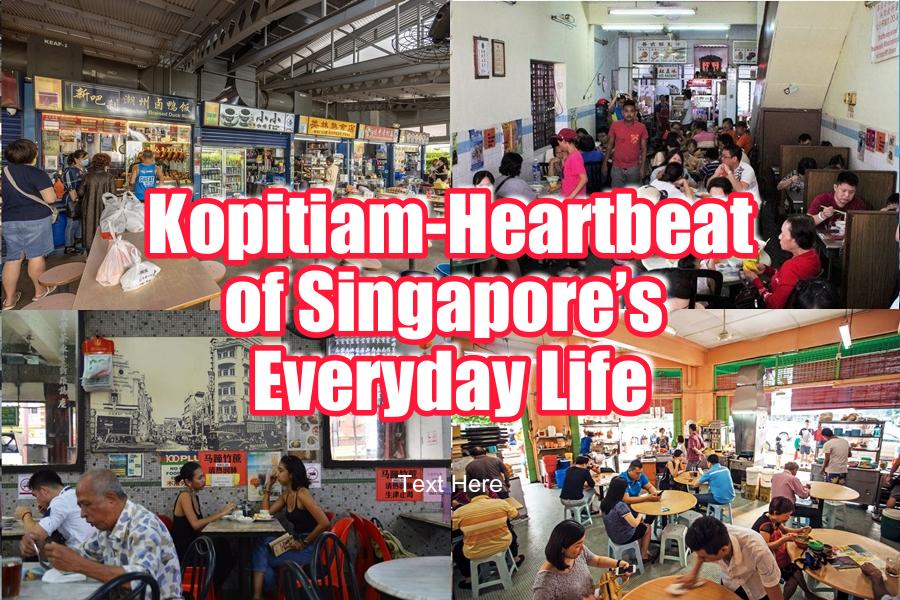
There’s a particular sound that defines Singapore mornings — the clink of porcelain saucers, the hiss of water hitting the coffee sock, the rhythmic scrape of kaya toast against the grill. In a kopitiam, life hums before the city even wakes.

A Cup of History
The word kopitiam comes from kopi (Malay for coffee) and tiam (Hokkien for shop). These humble coffee houses first appeared in the 1800s, run mainly by Hainanese immigrants who learned Western brewing from British colonials, then gave it their own twist — darker roasts, condensed milk, and butter for richness.

Over decades, kopitiams became the pulse of Singapore — the meeting place for taxi uncles, retirees, students, and businesspeople. Every neighbourhood had one, each with its regulars who treated it like a second home.

A Social Equaliser
In a kopitiam, everyone’s the same. You might see a CEO and a cleaner seated side by side, both enjoying kopi and kaya toast. It’s democracy in its purest form — caffeine-fueled and communal.
Conversations rise and fall like the tide — politics, football, gossip, and laughter all mix freely. For many, the kopi stall owner knows them better than their colleagues do.
Still Standing in a Changing City
Even as malls and chain cafés spread, the kopitiam remains an anchor. Some have gone modern — selling lattes and offering Wi-Fi — but many still cling to the old rhythm: marble tables, ceiling fans, and handwritten menus.

In an era obsessed with speed, the kopitiam teaches slowness — how to sip, observe, and belong.
We believe that:
More than coffee, kopitiams serve connection — proof that community can still live in the simplest of places.