Think Jalan Besar is just another busy road filled with food shops, old shophouses and traffic? Look a little closer and you may realise you are walking through one of Singapore’s most interesting old neighbourhoods.
Related Links: Berseh Food Centre: 14 Must-Try Hawker Stalls, Pek Kio Market & Food Centre Must-Try Hawker Stalls, SkyResidence @ Dawson: HDB Living With Food Just Downstairs, 5 Free Activities in Singapore You Can Enjoy for $0, Civil Defence Heritage Gallery: Singapore’s Oldest Fire Station, Joo Chiat Road: Where Heritage Meets Hip Living


In fact, Jalan Besar once looked nothing like what we see today.
Before the rows of colourful shophouses and cafés appeared, much of the area was swampy land, plantations and vegetable farms. Betel nut and nipah palms grew here, and in the 1830s, brothers Richard Owen Norris and George Norris acquired land in the area and planted fruit trees.

A track gradually developed through the plantations, and by the late 1800s it had grown into a proper road. Its name was wonderfully straightforward — Jalan Besar, which simply means “Big Road” in Malay.
And yes, compared with many smaller roads around it at the time, it really was the big one!
As Singapore expanded, Jalan Besar became much busier. Bullock carts, horse-drawn carriages, traders and workers passed through the neighbourhood, while houses, shops and businesses slowly replaced the former swamps and farms.

A neighbourhood built by workers
Jalan Besar was never just a residential district. It was very much a working neighbourhood.
People living around the area earned their livelihoods as shopkeepers, labourers, tailors, craftsmen, goldsmiths, food sellers, transport workers and tradesmen. Nearby industries included sawmills, rubber warehouses, slaughterhouses and pineapple factories.

Different communities — including Chinese, Indian, Malay, Peranakan, Eurasian and European residents — also settled around the district, creating the colourful cultural mix that can still be felt today.

Look up — the buildings tell stories too
One of the best things about exploring Jalan Besar is simply looking at the buildings.
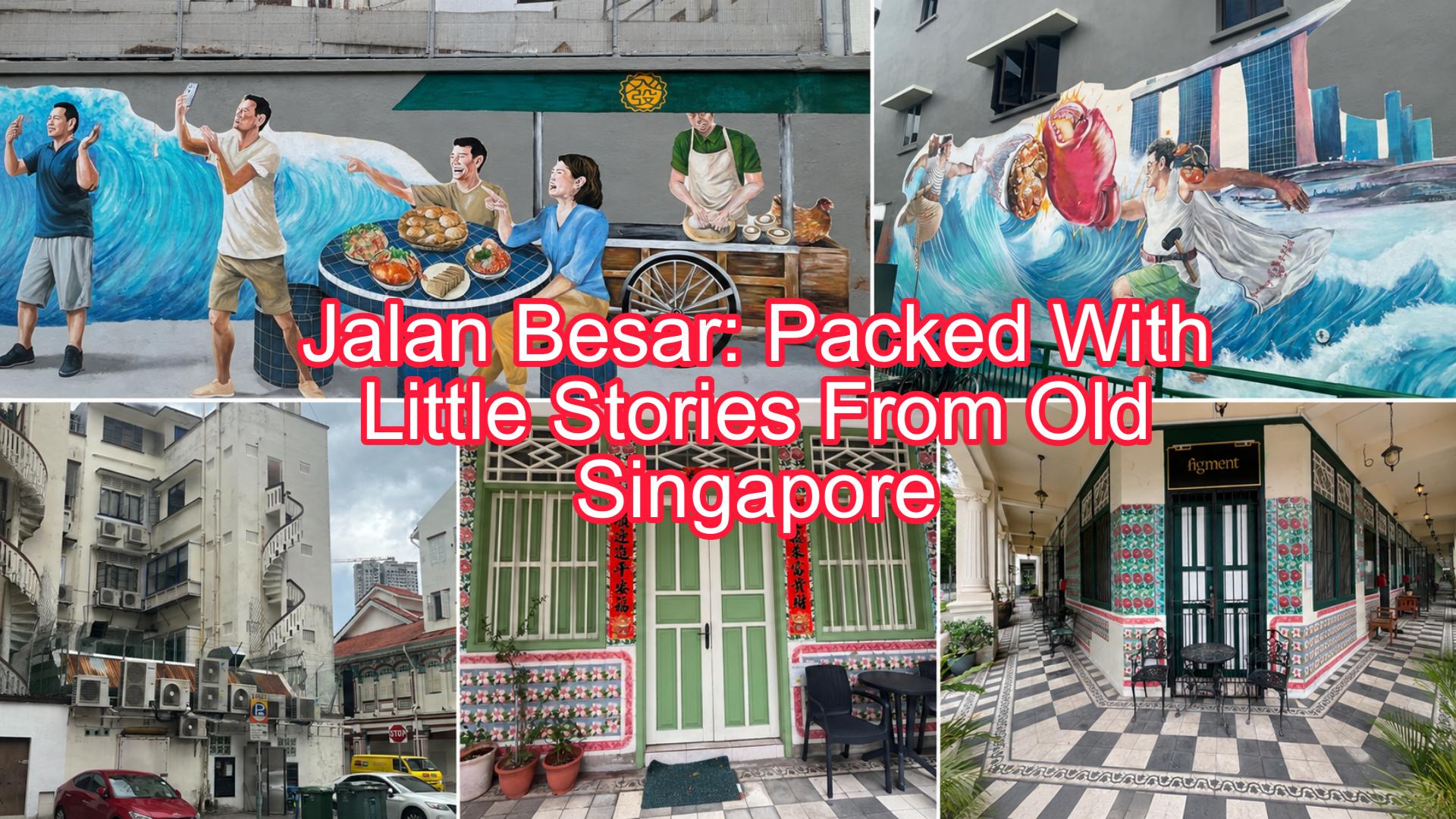
Instead of modern glass towers everywhere, you will still find rows of old shophouses with decorative pillars, pastel façades, wooden windows, intricate tiles and five-foot ways.


Some buildings carry strong colonial-era influences, while others feature beautiful Peranakan-style tiles and ornate details.
Walk slowly and you may spot old clan associations, traditional businesses, religious buildings and architecture that looks as though it belongs in another decade.

Then, just a few doors away, there might be a trendy café.
That contrast is exactly what makes Jalan Besar fun.
Today, curry rice shops, traditional eateries, colourful murals and modern coffee joints sit comfortably among buildings that have witnessed generations of Singaporeans come and go.


So the next time you visit Jalan Besar for food, don’t rush straight to your meal.
Take a walk first. Look at the tiles, old windows, faded signs and narrow lanes. Jalan Besar may be called the “Big Road”, but some of its best stories are hidden in the smallest details.